


*Listeners note, in this article I share some insights I recovered in the wake of Charlie Kirks murder. I’m not staking out positions on his views, nor dismissing the views of those who found some of his words troubling. Please listen for more.
After the murder of Charlie Kirk, and the rhetorical shitstorm that followed, I took a break from posting. The world surely doesn’t need me to say anything. But writing is cathartic, a way to work out what’s happening, and this event hit me harder than I expected.
The evening of Kirk’s murder, after I had inadvertently watched a video of his death, I started putting some thoughts together, but nothing felt right. Everything I wrote began with throat-clearing disclaimers like, “I wasn’t a follower of Mr. Kirk,” or “I didn’t share his opinions…” These weak waivers were just attempts to immunize myself from blowback. So stupid.
But here’s where I come in, because there is something jarringly familiar between what I—and countless others—have endured and what happened to Mr. Kirk. While he was staggeringly successful and famous, I’m obscure, a pauper by comparison. His videos garnered billions of views; my podcast episodes got thousands of listens. The similarity isn’t in scale, it’s in the response to rhetoric.
My podcast, Out Of The Blue, isn’t just the story of being wrongfully accused—it’s also about the environment in which it happened. The #MeToo movement, once rooted in legitimate grievances, mutated into a moral panic. The reaction to Kirk’s death carried the same shape. A moral panic is when a community becomes so consumed by fear or outrage that it exaggerates threats, abandons nuance, and punishes not only the guilty but often the innocent. It’s a dirty bomb: a few targets are hit, but the blast radius takes out bystanders as well. Worse still, those wounded—and anyone who dares defend them—are silenced and shamed. To speak up is to risk being branded a bigot, a racist, or, in my case, a rape apologist.
Once I was seen through the distortions of a moral panic, people I had once trusted chose to believe a fiction. They didn’t weigh evidence; they surrendered to the comfort of outrage. In the vacuum of falsehoods and feelings, a villain feels like an answer, the devil they needed. That kind of thinking isn’t principled; it’s foolish. Stupidity in the service of cruelty is still cruelty, and it is wickedly dangerous. Because, once you dehumanize another, you create a permission structure for violence.
In the days after Kirk’s murder, I watched people clip, quote, and circulate his words as if each fragment were the whole story. Stripped of context, every remark became a weapon, proof that he was the monster they already believed he was. Look, I didn’t follow him, but when I went back to the source, the actual videos, I saw how much had been misquoted, flattened, or simply invented. What circulated was not Kirk, but a caricature. I recognize that move. I lived it. The point is exactly the opposite of liking him or not: truth isn’t a courtesy we extend to friends; it’s the bare minimum of honesty in public life.
Once I was reduced to a distortion, I no longer had a voice in my own story. The accusation spoke louder than I ever could. People didn’t ask whether the evidence matched the charges; the charges became the evidence. In Kirk’s case, too, I saw friends posting with caustic certainty—not because they knew what he had said, but because misrepresentation had done its work. That’s another feature of moral panic: the cascade of distortion, spreading like a swarm. Once the swarm has its version of you, pushing back is nearly impossible.
To be certain of someone’s guilt without evidence is not simply a judgment, it’s a sentence, a severing. People who once laughed with me, trusted me, knew me, now looked as though I had crossed into another species. I wasn’t Carr anymore. I was “the accused.” A cautionary tale. And once you become that, you’re contagious, a virus. People scatter. Conversation ends.
Living with that rupture has meant learning how to carry absence. I don’t mean forgiving in some saintly sense, or forgetting as if nothing happened. I mean accepting that some doors stay closed, and life has to keep moving without waiting for them to reopen. Certainty hardens people; it doesn’t just freeze their judgment, it freezes time. To them, I will always be who they believed I was in that moment.
What I’ve come to see is that distortion feeds cruelty. Conviction—certainty without evidence—is the malware of our time. Once it installs itself, it rewrites everything: friendships, reputations, even whole communities. And the damage spreads faster than truth can catch it.
To find joy in murder, or to have conviction that he deserved it a bullet in his neck, is sick and heartbreaking, whether we agreed on anything at all.
The only real counterweight, as I see it, is kindness. Not as a strategy, not sentimental niceness, but kindness as a discipline, a verb. Asking: who are you being while you’re doing whatever you’re doing? Does this word, this gesture, this act, leave more harm or more care in its wake? Kindness doesn’t need agreement, and it doesn’t mean silence in the face of wrong. It’s treating others with familiarity, refusing to let certainty turn them into abstractions.
I think of cruelty as malware, and kindness as the recovery program. It doesn’t mean the malware disappears; it means choosing to act rightly despite it. Being kind requires something from us.
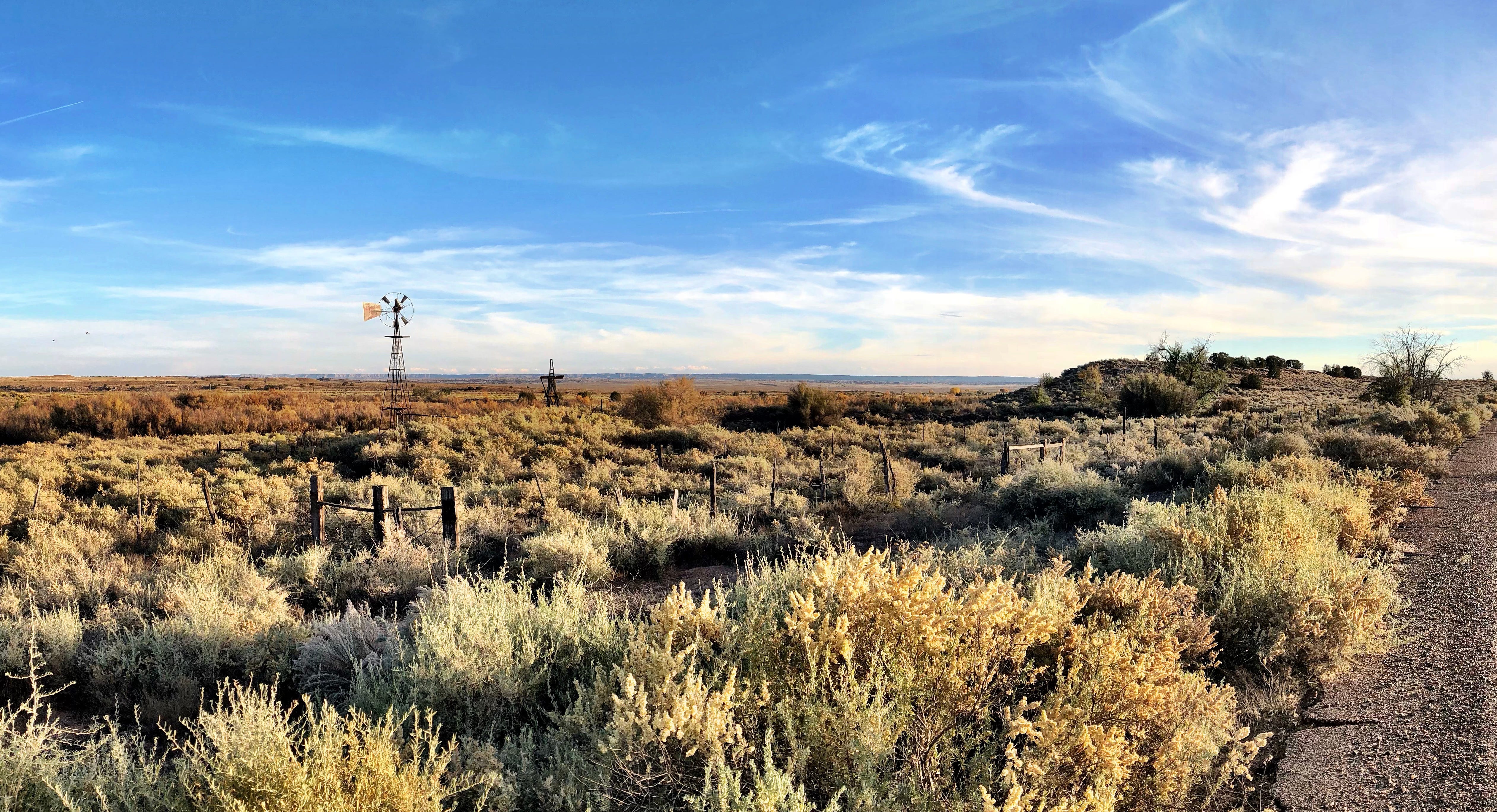
Finally, I think back to a short story I wrote years ago, before I was ever wrongfully accused. The Windmiller’s Tale, it follows a young man in middle management, unsettled about his future, who meets an older farmer by chance on the edge of town. He returns often, sensing the farm has lessons in resilience and cultivation. He learns the gentle care of livestock, the strength coaxed from crops, and the maintenance of tools that weather storms and yield abundance. But the deepest lesson comes when he and the farmer rebuild an old windmill.
In the late 1800s, American windmills changed forever with one innovation: the blades and tail could pivot to follow the wind. No matter which way the weather turned, the mill would catch it, drawing water from the ground, sustaining life even in the middle of nowhere.
In that mechanism, he saw a way of living. You cannot stop the winds of change, but you can pivot to meet them. You can convert what comes at you—fear, distortion, cruelty—into something that sustains. That windmill became an icon of resilience and conversion. Energy into water. Cruelty into kindness. Life into life, again and again.
The winds will always come; the work is in how we turn them.
*I use an AI editor to fix sentence structures, grammar and clarity. These are my words and ideas.


