


I got in my car last Sunday evening and headed east out of Minneapolis, bound for New York. Hitched behind me was an Airstream—an expensive, aluminum-glam camper where I’d be living for the next three weeks, along with my two dogs. Part of my slow emergence from the fog bank of career and personal ruin that began in 2018.
Looking back, I’m not sure why I believed a travel trailer could resolve my inner turmoil or chart a journey back from the personal hell I’d been thrust into. The idea first came to me in 2021, as a way to redirect my mind when I lay in bed each night. Instead of replaying scenes from the case—images of incarceration, legal purgatory—I tried to swap in visions of the Airstream. I’d imagine the model I wanted, the roads I’d travel, the feeling of freedom on the open highway. To be a wandering flaneur.
Of course, buying an Airstream was financially foolish. Recovering what was lost in the landslide that followed the accusation has been nearly impossible. Few places will hire me, and those that might are too labor-intensive. I applied to be a dog sitter through an online platform for pet care. But I was declined. While I have no criminal record, I have a public one—manufactured by media. A quick search of my name pulls up a mugshot, the allegations, the headlines. Not surprising, I got a note saying “After reviewing your application, we have declined...” You know.
So I drove across Wisconsin, Illinois, Indiana, Ohio, Pennsylvania, and New York along Interstate highways—the service corridors of America. Nothing of interest happens along them. Aside from the rolling hills in Pennsylvania and New York, every state looked like every other.
Why, then, would I find this sort of inefficient travel—the long hours of going nowhere-not-so-fast—worthwhile? Because it’s boring, dull, and perfect. As the miles passed, my mind stopped thinking about much. Just the rumble, the hypnotic boom-ba boom-ba-boom of the tires over concrete seams. The slow unfurling of silence.
It’s liberating to do nothing but drive, stopping occasionally to walk the dogs or take a piss. It’s just road, exit signs, and cruise control.
It felt good not to be productive, to feel out of touch and disconnected. Out there, I’m more of a nobody than usual—just an old guy and a couple of dogs, pulling along toward some friends.
I spent a couple nights at interstate truck stops, sandwiched between the rattle and thunder of big rigs. These truck stops look nothing like the ones that dotted the highways back when I was doing Renaissance festivals in the 1970s. Now they’re closer to mini-marts or micro-malls, with clean showers, well-lit parking, 24-hour fast food, and staffed by jovial attendants.
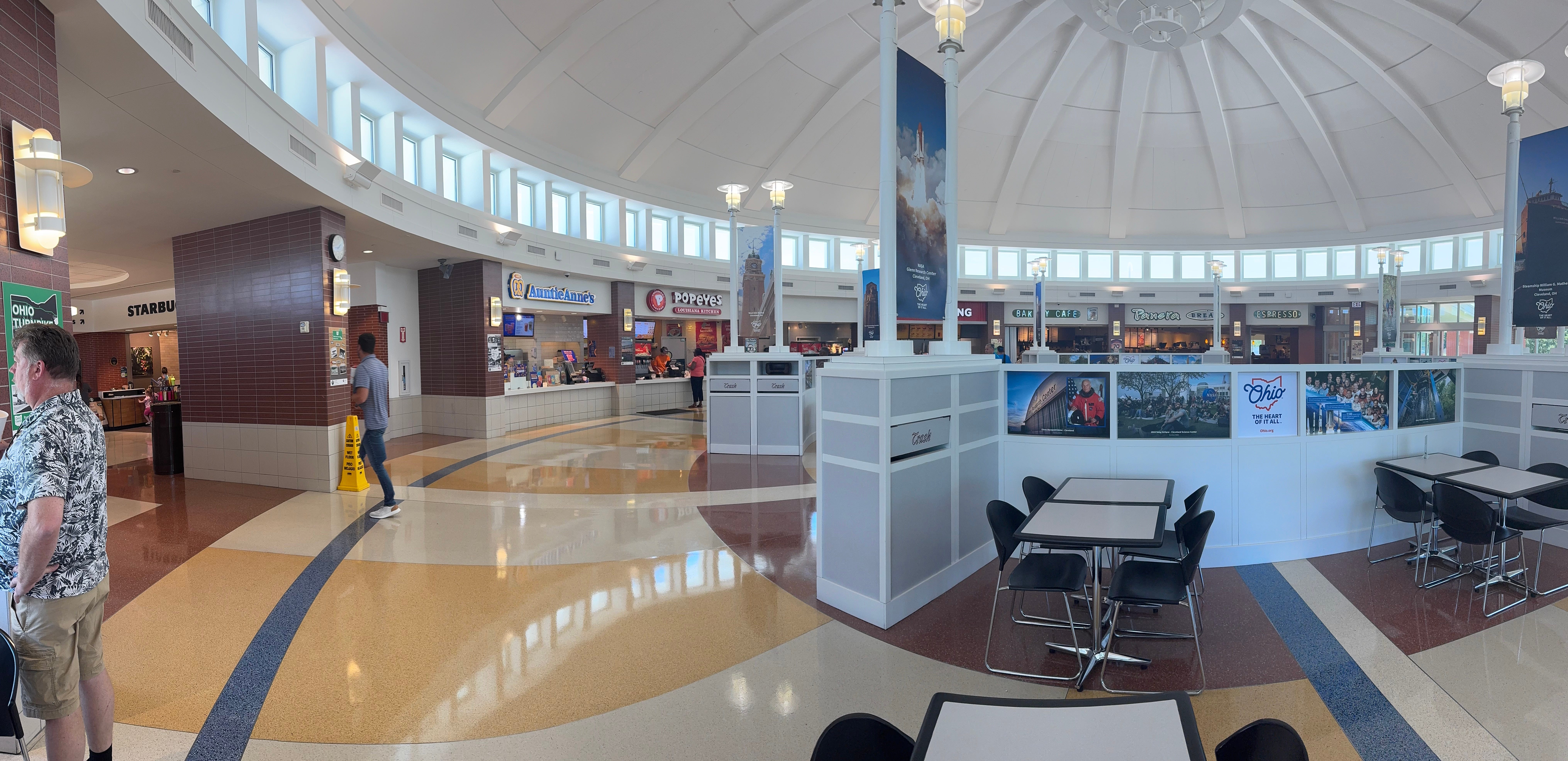
At night, under the red glow of the semis’ clearance lights, weary drivers shuffled in and out—some ordering fast food by pointing at overhead pictures, their voices thick with fatigue and broken English. A tall Sikh man in a crisp black turban brushed his teeth in the restroom, while others shaved, shit, and scrubbed the road off their faces.
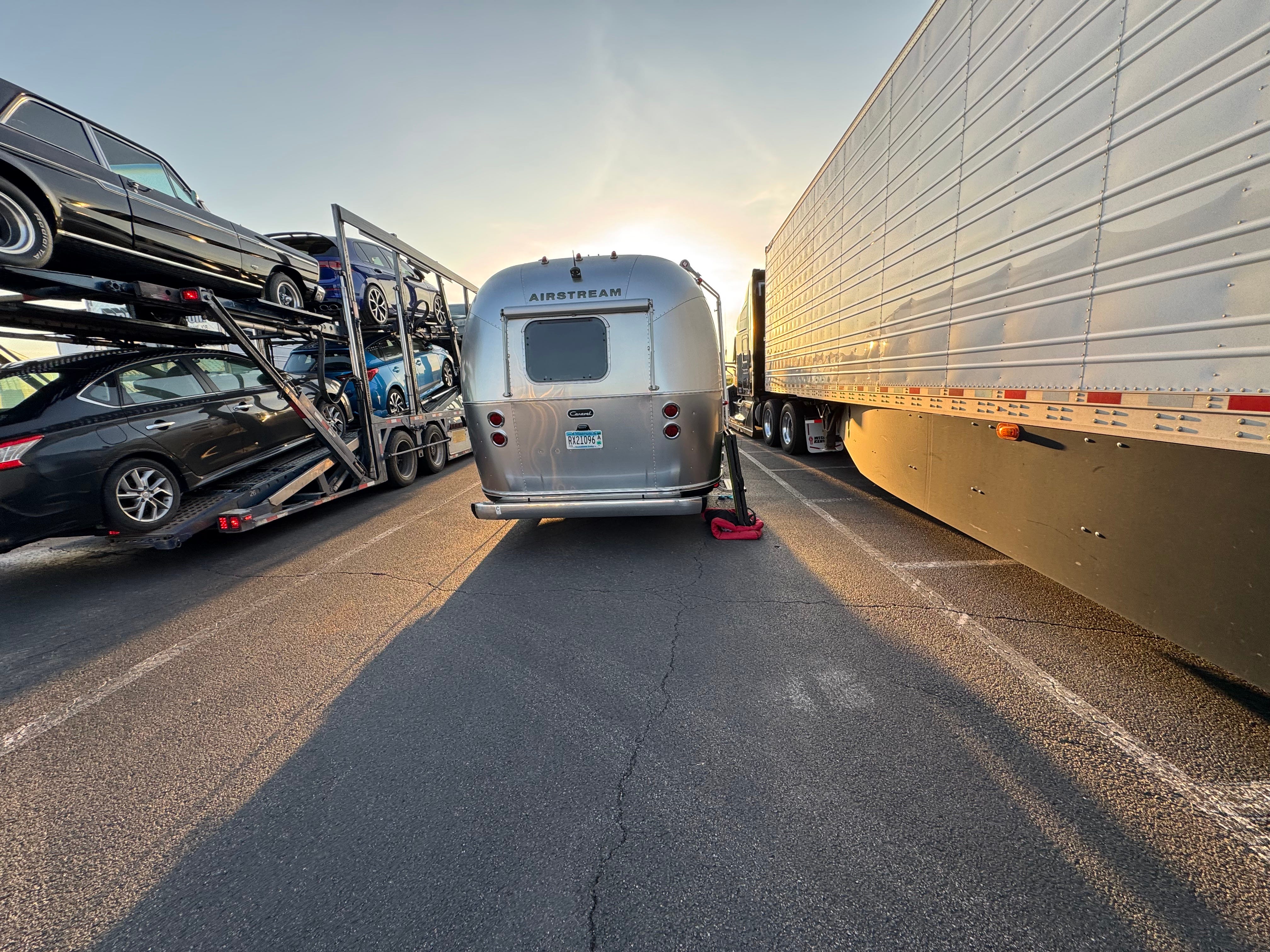
Wrapped in the soft white noise of the Airstream’s air conditioning, the dogs and I slept in our aluminum cocoon, parked on an asphalt lot and surrounded by the strange comfort of rolling commerce—the endless hum of goods in motion, flowing from somewhere to somewhere else. Whatever din of discord plagues our politics and culture, on the road there’s a steadying indifference to the stupid show playing on the main stage of the moment. These trucks are the tail end of a long chain of makers, shakers, buyers, and sellers—their existence is proof that life goes on. When they stop, that’s when you should worry.
One morning, I opened the door to take the dogs out and found a rig parked so close there was barely two feet of clearance. Outside, the lot was overflowing—trucks lined up side by side, dwarfing a smattering of camper trailers. Along the edges, more trucks idled nose to tail, engines rumbling, cabins chilled, their masters sleeping inside the hum
The daily drives were numbingly dull and mindlessly predictable. The pace was neither here nor there—fast, slow, and who cares. To drive across the country is to surrender to the what is of traffic, construction delays, and long stretches of silence. You’ll get there, wherever there is, eventually.
For the first time in years, I felt anonymous—just another traveler in places that owed me nothing. Indifference felt good. It was freeing. The people I met along the way were kind in small, ordinary ways that gave me hope. Things are hard everywhere, but out there, in the middle of here and there, things keep moving. And they will, as long as we have wants and needs.
When you spend enough time driving forward—just staying in motion—the past begins to loosen its grip. Maybe that’s all this trip was ever about: finding a little space in front of me, that I have somewhere to go.
Whatever happens, I know the road will always be there—open, waiting—for me and my tiny tin dreams.


