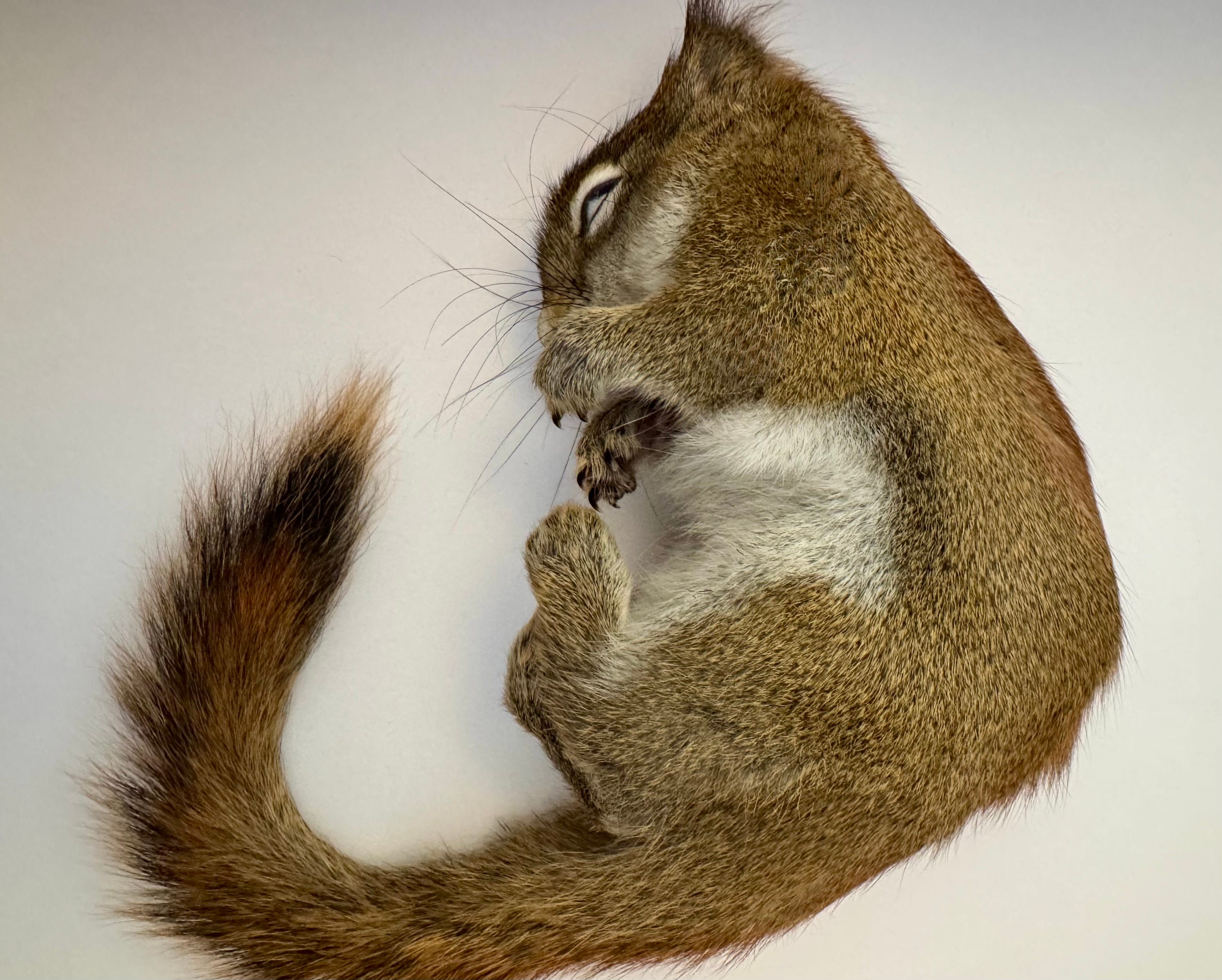
A few days ago, my wife Marian and I were taking one of our evening power walks on a quiet neighborhood street when a car passed by, driving too fast, and a half block in front of us ran over a gray squirrel that was crossing the street. It writhed for a few moments, and as the car sped on, the body stopped moving. It was dead.
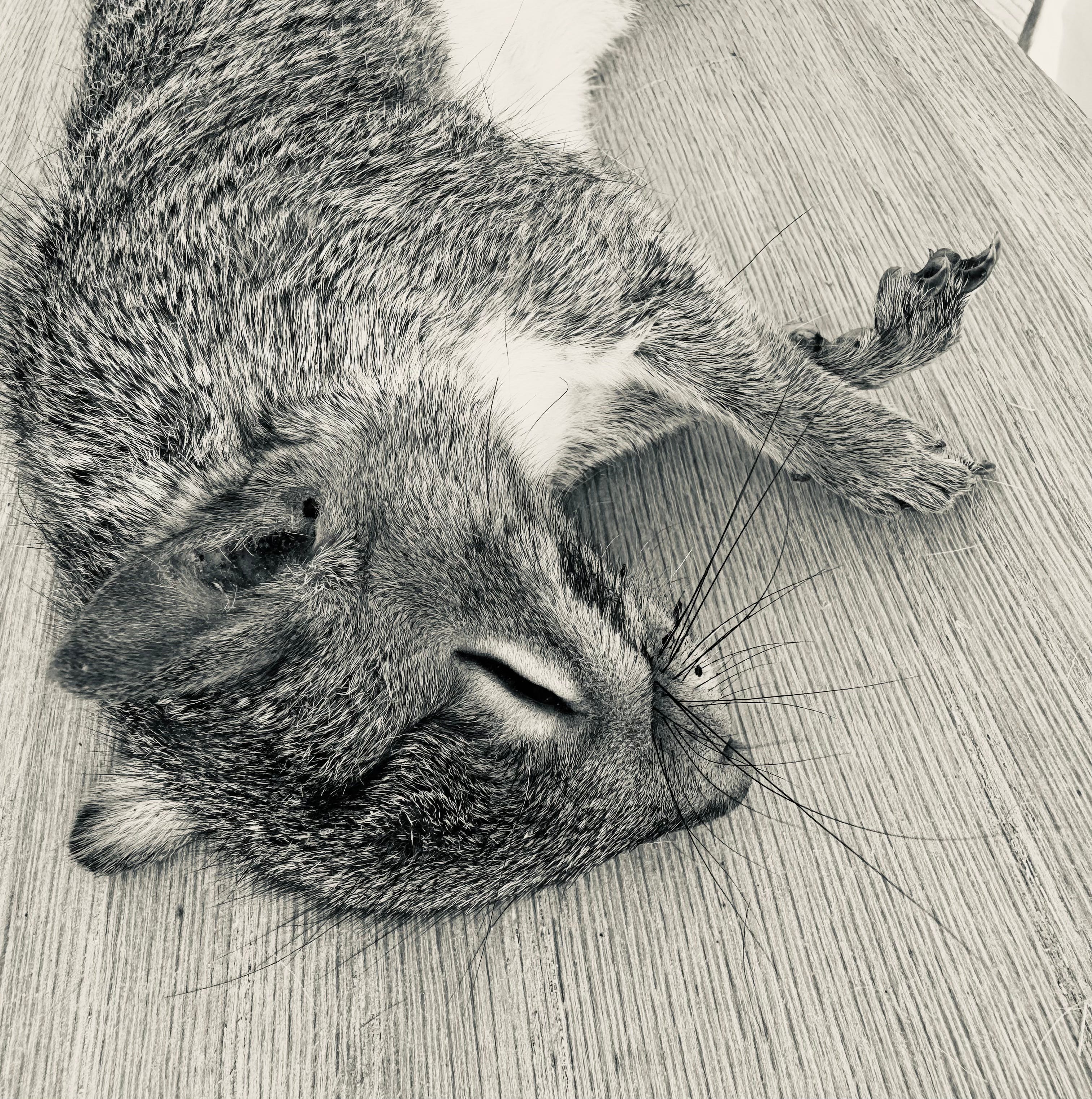
Gray Squirrel, struck by a car — June 2025
I approached the poor thing expecting to see blood spilled onto the pavement, the crushed body, but there was no blood anywhere—its eyes open and clear, ears rigid as if still listening. I picked it up by the tail and set it in some brush just off the edge of the street. I would come back later to bury it.
This is a thing I do: the animal undertaker, the guy who picks up dead animals and carries them away. A neighbor, who saw me scooping up a dead blackbird, assumed I put them in the garbage. I explained that I do just the opposite: I bury them, many in my backyard. If it’s winter, I’ll take the remains to a wooded area and place them off the path. I estimate I’ve picked up and buried dozens of animals over the past few years. Besides squirrels, I’ve picked up chipmunks, hawks, rabbits, opossums, a raccoon, blue jays, ducks and ducklings, blackbirds, robins, and finches, a Canadian goose, and more. Sometimes their bodies were mangled from being run over, entrails spilled across the pavement; others seemed to have died from unknown causes, intact but inanimate.
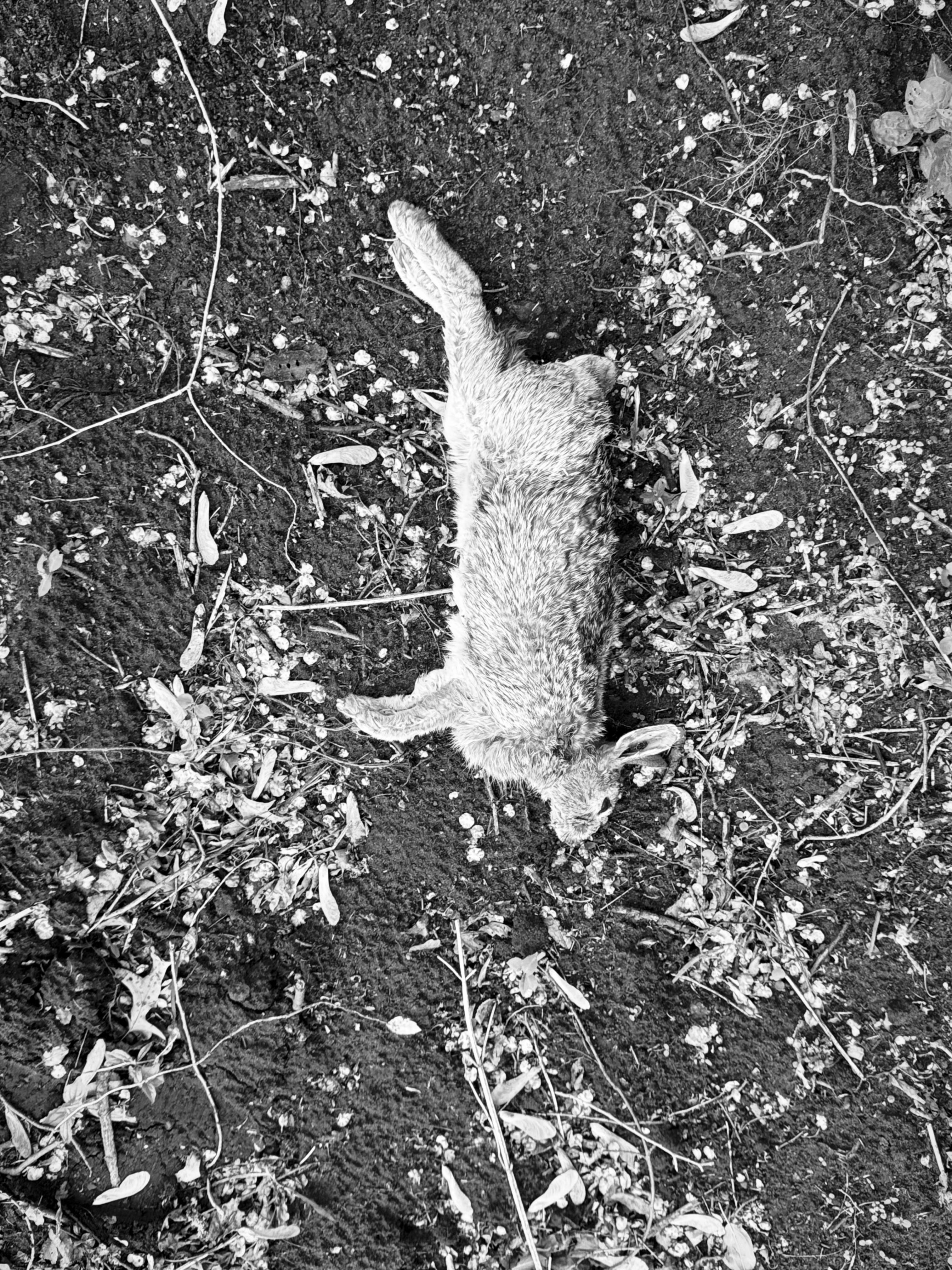
Eastern Cottontail, struck by a utility truck — July 2025
I began this ritual in the wake of being called a monster, arrested, and dragged through the press. It was my answer to the casualness of cruelty, the poisonous indifference to suffering. As a photographer, I began to photo capture some of the creatures I found, not out of some misplaced macabre fascination, but as a study of what is both beautiful and tragic, and as a way of remembering.
In 2018, with no career left to pursue, I started walking—often ten miles a day. The fresh air steadied me against despair. But it was on these walks that I noticed the dead more than the living: sparrows on sidewalks, rabbits on the shoulder, squirrels twisted on the curb. I realized I had always looked away from these small deaths. Now I chose to stop, to see, and to respond with care. In the case of my neighborhood, I took more direct action: I picked up, moved, and buried the creatures with my highest regard, acknowledging their existence and recognizing their contribution to the ecosystem
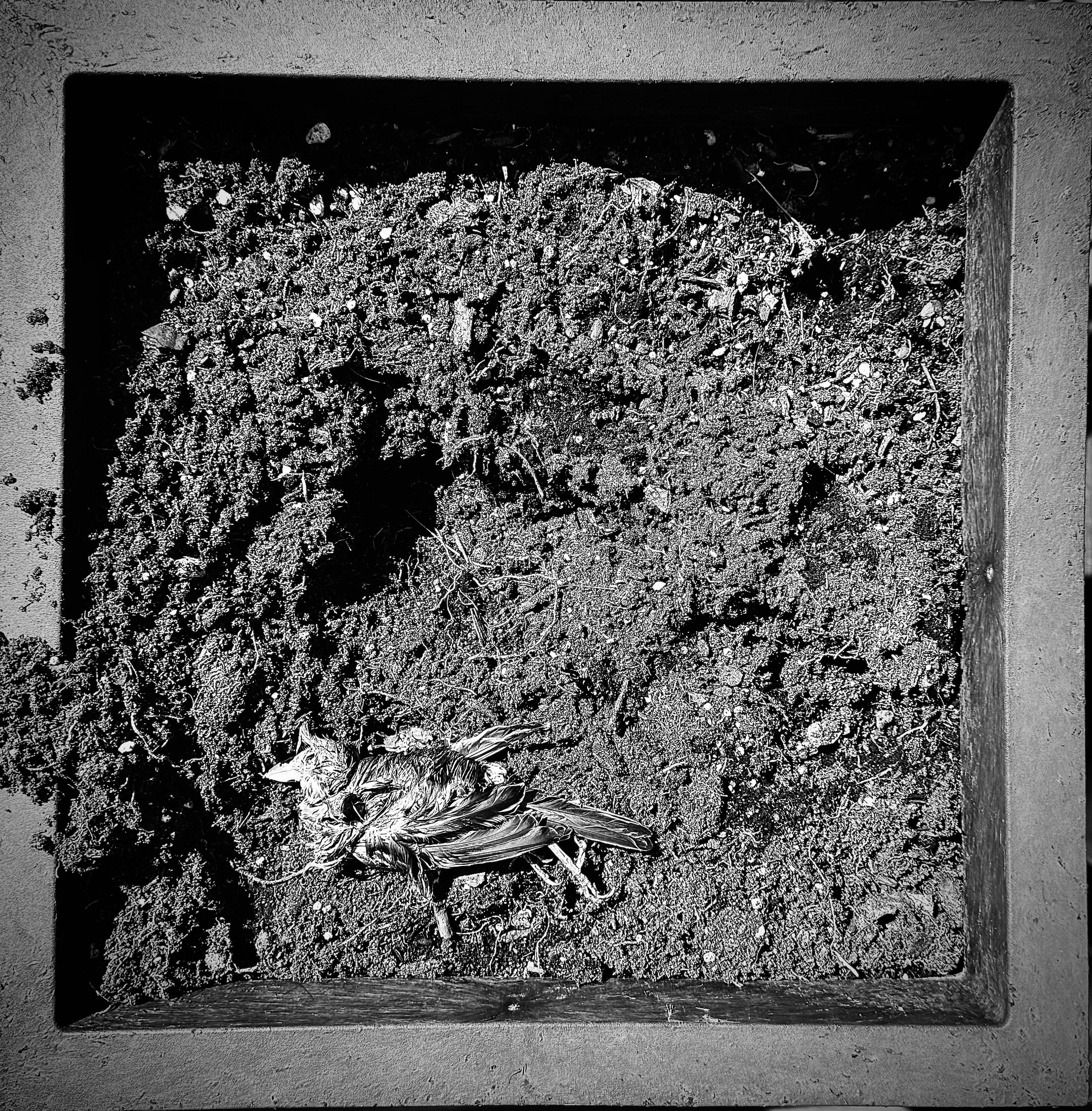
House Sparrow — found in a planter, May 2025
There was one more thread I couldn’t ignore. Recognizing the ugly and often violent deaths of so many small creatures forced me to question my own commitment to non-violence. In the aftermath of my arrest, I was furious — consumed by how radically unfair it all was. How could this have happened, and how could those who spread lies walk away untouched? But death doesn’t care about fairness; it just is. Things die, they get run over, their offspring are eaten, drowned, poisoned, bludgeoned, or shot. Brutality is not an accident but a feature of the world. Learning to see it plainly helped me cope with the coil of anxieties and, in time, to place myself back in context.
Every day I am surrounded by countless deaths, most of which I never really paid attention to — not because they were hidden, but because they didn’t seem to matter. I’m sure I’m not alone. We can all see the obvious roadkill in our periphery, casualties of cars, boats, lawn mowers, poisons. Sometimes we even feel bad for a brief moment. After all, we don’t mean to hit deer, run over rabbits, turtles, or frogs. They’re accidents. And then there are those that die by causes unknown. But in all of these instances, it seems to me, we are running a kind of calculation about the value of a particular life. The squirrel that scurried in front of the car was just trying to cross the street and was killed. The driver, as well as all of the people walking nearby, didn’t give much thought to that small life, and everyone went on their way. But I didn’t. I stopped and looked, quietly measured the moment, and felt a true sadness. This small body was in the midst of taking care of its life, its place and needs, not fully aware of the dangers between the curbs.
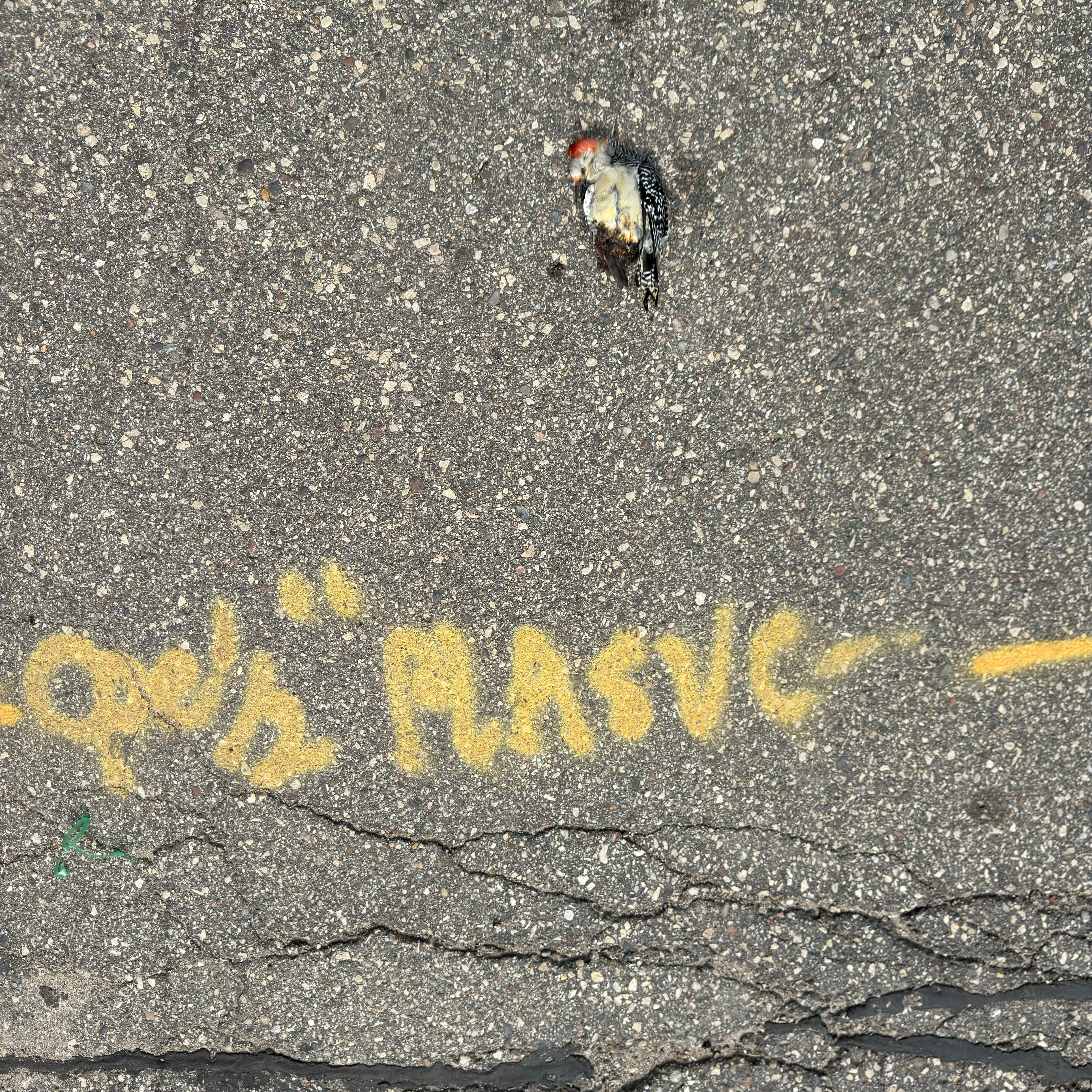
Red-bellied Woodpecker — roadkill, September 2025
These winged, finned, and furry neighbors live in trees, brush, rivers, and lakes. Some fly, some burrow, some hide under porches. They are abundant, ordinary, easy to dismiss. My uncle once said of field mice, “Even if you killed them all, that’s not all of them!” But as Barry Lopez wrote, “To consider that the honey bee and the wild horse have their own integrity and perhaps even their own aspirations, and can no longer be viewed as subjects, willing to participate in the construction of a world built to serve the needs and desires of human beings alone.”
At the time I was also enduring my own disappearance. Relieved of a career, undone by falsities and lies, I knew what it meant to be treated as disposable. As Lopez observed, “Disappearance reminds us to notice, transience to cherish, fragility to defend.” By paying attention to the overlooked, I was saving myself from oblivion. But, death is coming for all of us, and this little circus of temporary amusements will fade and all of us will decease.
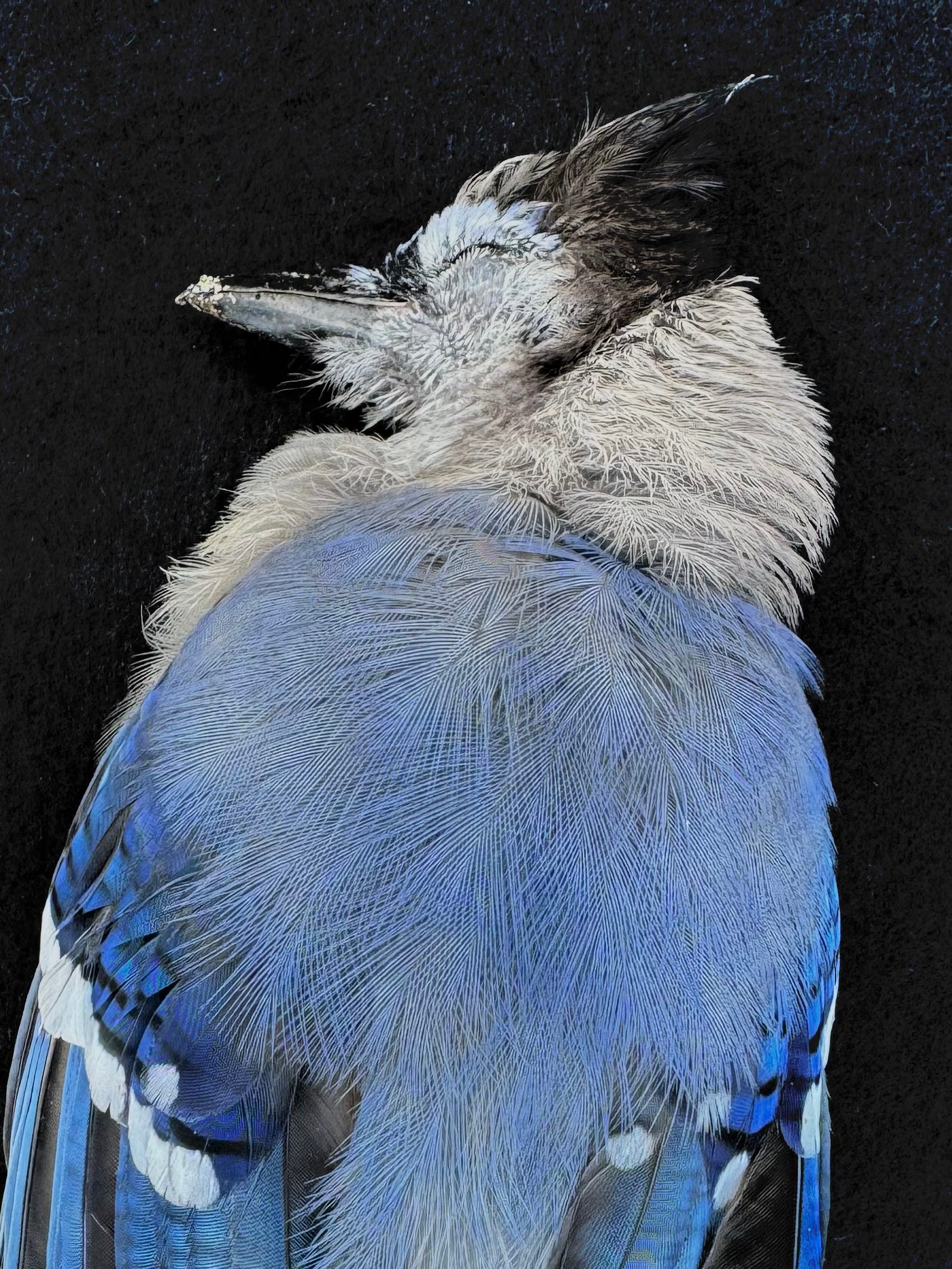
Blue Jay — killed by a Cooper’s Hawk, 2024
Each burial feels like a correction to a larger miscalculation. We keep the wrong ledger. A squirrel has no price tag, so its death means nothing. A field mouse is common, so it is expendable. A robin is ordinary, so it slips past notice. But a world in which sparrows and chipmunks count for nothing is a world in which our own lives are cheapened too. By pausing, being cautious, patient and kind to every living creature, or noticing and paying respect to their dead I try, so hard I try, to balance the ledger, if only for a moment, to see with clarity the beautiful tragedy of this lift.
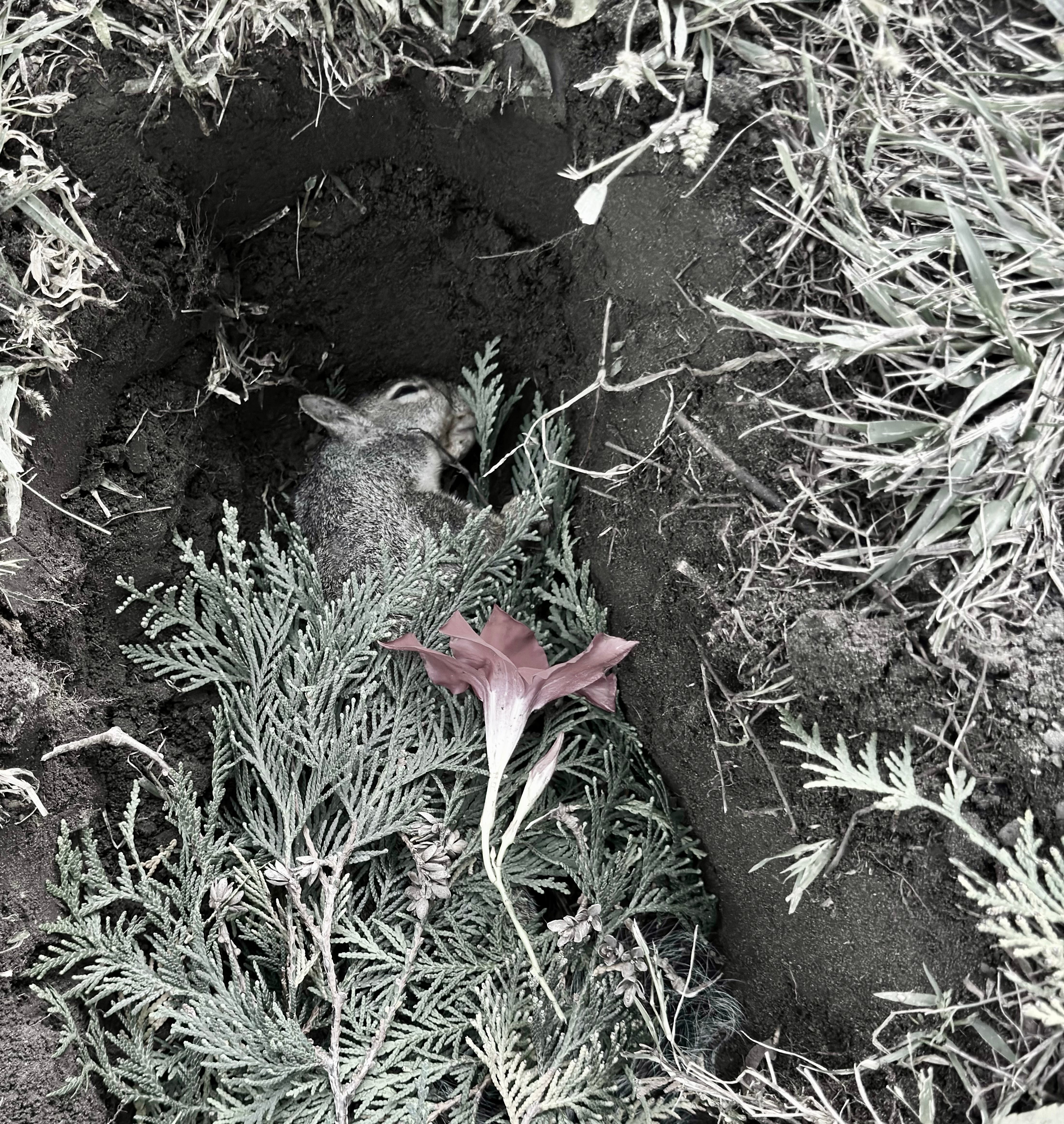
Easter Gray Squirrel Burial - Run over by a speeding car - September 2025
Acknowledging the death of something small drew me out of myself, beyond ego or injury. To respond with gentleness kept me from turning bitter, and taught me that the truest refusal is not hardness but compassion and kindness — a way of honoring every life that longs to flourish, including my own.