

*I’m on the road this week, and won’t be recording audio until this weekend.
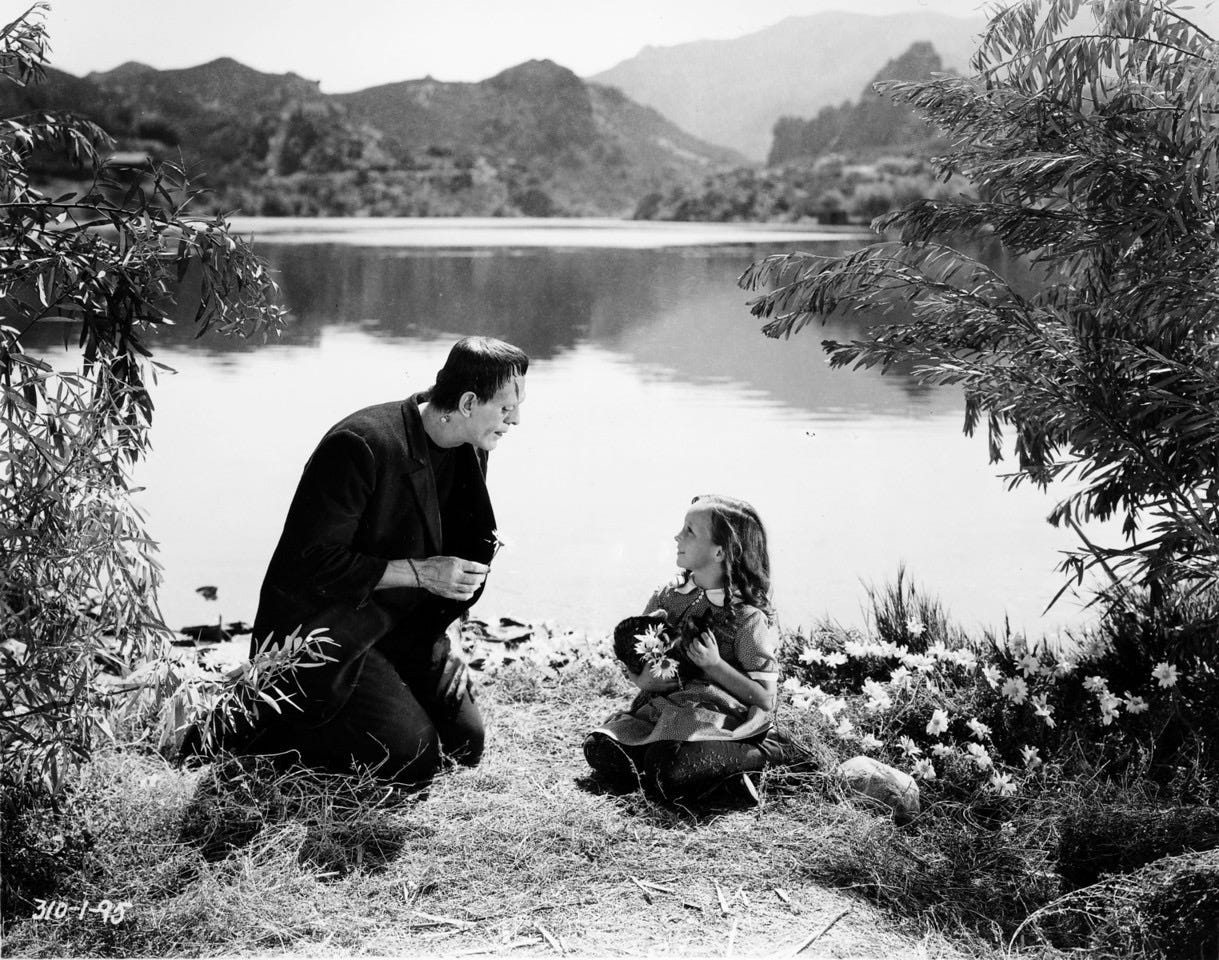
I got into a small push and pull with a buddy of mine over some comments he made regarding the existence of the now non-existent Epstein List, or files, or whatever they are today. He was upset that Trump had suddenly decided the case was closed,and that everyone should move along. My pal was sure Trump and his minions were hiding something, that DJT had Epstein killed to cover up his sins. Oh boy.
Epstein is dead, but he’s been reanimated, suddenly alive again, and everywhere. Brought back to life by the Trump administration, it’s FrankEpstein.
When I sent a private text asking if there was any evidence Trump was a pedophile. He said, “Not yet,” but he was sure Trump was guilty of something, then wrote about photos he had seen of Trump with young women, like that was supposed to seal the deal. I told him that doesn’t count. Until there’s something concrete, something provable, not just a vibe, then all we’ve got is noise. Trump might be a narcissist, but maybe he’s a pedophile? That “maybe” matters an awful lot. It comes before the accusation, and it ought to come before the outrage. Because until we know, we don’t. And pretending we do just because we hate the guy? That’s not justice.
Rushing to condemn someone, including those we revile, because we believe in our heart they are criminally perverted without knowing what is true is a dubious moral proposition. Innocent until proof of otherwise, must also include people with spray tans and gold toilets.
Trump invited some of this on himself. He’s been lobbing conspiracy horseshit into the world for years, birther crap, the 2020 election was rigged, vaccines make your dog vote Democrat, whatever. He lit the match. And now? That fire’s headed straight for him.
But still. Evidence. That’s the line.
Everyone is innocent until proven guilty. Proven is the operative word, a past participle that places the burden on the state to demonstrate someone’s guilt. All of us would to well to mirror our courts, and resist the ambient judgment being tossed around in the news and on social media.
The courts get this. They’re supposed to resist the heat of headlines and the noise of social media outrage. It’s a slow, boring process. Thank goodness, because if the courts were influenced by social and news media, I would be making license plates in federal prison. That’s the point. You don’t rush to burn someone at the stake because your cousin saw a meme.
As Jeffrie G. Murphy, Professor of Law at the Sandra Day O'Connor College of Law, once wrote:
“Justice must temper the ‘vindictive passions’—anger, resentment, and retaliation—even when they feel emotionally compelling.”
But here we are again. Epstein killed himself, but the monster lives on, in the imagination of a divided republic, animated not by what we know, but by what we suspect. And now Trump stands in the line of fire, guilty of something, which I’m inclined to believe, guilty of everything, not so much. On X, someone posted: “The DOJ must arrest and hold Trump so victims feel safe to come forward.” Reductio ad absurdum.
In The Crowd: A Study of the Popular Mind (1895), French psychologist Gustave Le Bon observed that this phenomenon was as real then as it is now:
“The masses have never thirsted after truth. They turn aside from evidence that is not to their taste... Whoever can supply them with illusions is easily their master.”
That word, illusions, lands hard. Illusions are comforting. They let us skip the hard part: waiting, thinking, asking questions. Illusions are fast and loud and easier to weaponize. And in a culture that is growing more accustomed to group outrage, illusion is the drug of choice.
Waiting for evidence or facts is the right thing to do, but it can feel like weakness. Why wait, when we know, we just know in our heart, that so-and-so is a such-and-such and did this that and the other things. But if you don’t have the goods, the proof, better to adopt the notion that you don’t know, than to pretend you do.
Buddhist teacher Jack Kornfield got it right when he wrote,
“The ‘I don’t know’ mind is an open mind, a wise mind. It’s the doorway to freedom.”
But, saying we don’t know, these days, that’s truly radical.
Spot on here Carr. Jumping on the anonymous bandwagon proves nothing other than you cannot confirm your own personal opinion and the willingness to voice it.